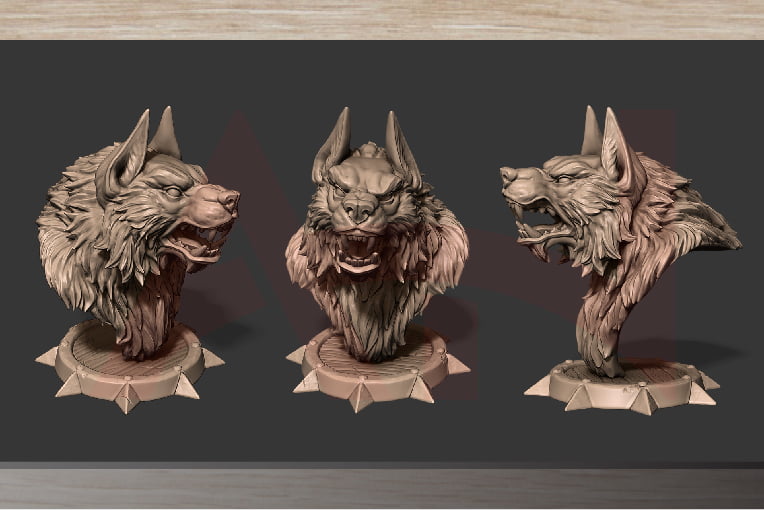
The world of 3D printing and digital asset creation is vast, but it can be highly frustrating when you encounter proprietary or uncommon file formats. If you have downloaded or extracted a Werewolf REAIF file (often associated with specific video game engines, proprietary 3D asset libraries, or localized animation frameworks) and want to bring it to life on your resin or FDM 3D printer, you need it in an STL (Stereolithography) format.
In this comprehensive guide, we will walk you through exactly what a REAIF file is, why it cannot be loaded directly into slicers like Cura or PrusaSlicer, and the exact step-by-step methodology to convert your werewolf REAIF file into a printable STL mesh.
Understanding the Basics: What is a REAIF File?
Before diving into the conversion process, it is crucial to understand what you are working with.
A REAIF file is typically an archive or a compiled asset file used by specific game engines or localized rendering software to store 3D character data, textures, animations, and rigging skeletons. In the case of a “Werewolf” asset, the REAIF file doesn’t just contain the static 3D shape; it contains data determining how the fur moves, how the werewolf transforms, and how the joints bend during an animation sequence.
On the other hand, an STL file is purely geometric. It discards colors, textures, rigs, and animations, translating the 3D object into a raw collection of interconnected triangles (a mesh) that 3D printer slicing software can read.
Therefore, converting a Werewolf REAIF file to an STL file is not just changing a file extension; it requires extracting the static mesh, posing the model, and exporting the geometry.
Step 1: Extracting the Werewolf Mesh from the REAIF Archive
Because REAIF files act like containers, you cannot open them directly in traditional 3D modeling programs like Blender or Autodesk Maya without extracting them first or using a dedicated plugin.
Using Dedicated Asset Extractors
Depending on where your Werewolf REAIF file originated, you will need an asset extraction tool.
- Identify the Source: Determine which engine or software generated the REAIF file (e.g., specific Unity/Unreal Engine mods, mobile game rips, or localized design software).
- Run an Unpacker: Use a command-line tool or a dedicated UI asset unpacker compatible with REAIF files to extract the raw
.obj,.fbx, or.gltffiles hidden inside the archive.
[Internal Link Placeholder]: If you are new to extraction tools, check out our comprehensive guide on [How to Extract Game Assets for 3D Printing] to master the basics of asset ripping safely.
Step 2: Importing the Extracted Werewolf Asset into a 3D Modeling Software
Once you have successfully unpacked the REAIF file, you will usually be left with a common intermediate format, most commonly an FBX or OBJ file, alongside texture files (PNG/JPG).
To convert this into an STL, you need to open it in a powerful, open-source 3D creation suite. We highly recommend Blender.
How to Import into Blender:
- Open Blender and delete the default cube.
- Go to File > Import and select the format of your extracted werewolf file (e.g., FBX or Wavefront .obj).
- Locate your file and click Import.
Your werewolf model will now appear in the viewport. However, because it came from a REAIF file, it might look strange. It might be standing in a flat “T-Pose” or “A-Pose,” with its arms spread out wide and its fur textures missing or looking like blocky meshes. Don’t worry—this is completely normal.
Step 3: Posing the Werewolf and Handling “Fur” Geometry
A dynamic creature like a werewolf looks terrible if 3D printed in a stiff T-pose. Furthermore, video games handle fur using “alpha cards” (flat planes with transparent textures), which do not print well in 3D.
Posing Your Model
If the REAIF extraction preserved the armature (the skeleton), you can easily pose your werewolf:
- Select the bones/armature of the werewolf model.
- Switch from Object Mode to Pose Mode in the top-left dropdown menu.
- Use the Rotate (R) tool to move the arms, claws, and jaw into a fierce, dynamic stance suitable for a miniature or display piece.
Fixing the Fur and Claws for 3D Printing
Because 3D printers require solid, manifold geometry, you must fix game-engine optimization tricks:
- Remove Alpha Planes: If the werewolf has floating flat sheets for fur or hair, delete them. They have zero thickness and will cause your slicer to crash or glitch.
- Sculpting Fur Detailing: Use Blender’s Sculpt Mode with a Draw or Crease brush to manually add fur texture back onto the solid mesh of the werewolf’s body.
Step 4: Making the Werewolf Mesh “Non-Manifold” and Watertight
A primary reason why direct conversions fail is that game assets are “hollow shells” with open holes. A 3D printer needs a watertight (manifold) volume to understand what is the “inside” and what is the “outside” of the object.
How to Clean the Mesh in Blender:
- Select your werewolf mesh and press Tab to enter Edit Mode.
- Press A to select all vertices.
- Press Alt + M (or Mesh > Clean Up) and select Merge by Distance. This deletes duplicate vertices that cause slicing errors.
- Go to Select > Select All by Trait > Non-Manifold. This highlights any holes in your werewolf model.
- Press F to fill the holes, or use the Grid Fill option for more complex openings.
The Automated Alternative: Microsoft 3D Builder
If cleaning the mesh manually in Blender feels too overwhelming, you can use a free tool that features one of the best automated repair algorithms in the industry:
- Export your werewolf from Blender as an
.obj. - Open Microsoft 3D Builder (available on Windows).
- Import the
.objfile. - If the software detects errors (indicated by a red box around the werewolf), click the pop-up notification to Repair the model automatically.
Step 5: Exporting the Werewolf File to STL Format
Now that your werewolf model is posed, cleaned, repaired, and completely watertight, it is finally ready to be saved as an STL file.
Exporting from Blender:
- Select your final werewolf mesh in Object Mode.
- Go to File > Export > Stl (.stl).
- In the export settings on the right panel, check the box that says Selection Only (this ensures you don’t export background cameras, lights, or old skeletons).
- Set your scale if necessary (though scaling is usually easier to do inside your slicer software).
- Name your file (e.g.,
werewolf_miniature_ready.stl) and click Export STL.
Step 6: Prepping Your Werewolf STL in a 3D Slicer
Congratulations! You now have a native STL file. However, your journey isn’t finished until the file is prepared for your specific 3D printer hardware. Open your slicer of choice—such as Ultimaker Cura for FDM printers or Chitubox for Resin (SLA) printers.
+-------------------------------------------------------------+
|               3D SLICING CHECKLIST FOR WEREWOLVES           |
+-------------------------------------------------------------+
|  [ ] Scale to Size (e.g., 28mm for tabletop, 150mm display) |
|  [ ] Orient for Best Detail (Tilt backwards 45° for Resin)   |
|  [ ] Generate Supports (Crucial for claws, tails, and jaws) |
|  [ ] Set Infill Density (15-20% Gyroid for FDM is ideal)    |
+-------------------------------------------------------------+
Essential Slicing Tips for Miniature Werewolves:
- Orienting Claws and Snouts: Werewolves have a lot of overhanging parts (claws, open mouths, long ears, tails). Never print them standing completely flat on the build plate. Tilt the model backward at a 30 to 45-degree angle. This keeps the support structures on the back of the model, preserving the high-quality details on the werewolf’s face and chest.
- Support Settings: Use Tree Supports (Cura) or Organic Supports (PrusaSlicer). These are much easier to break away from delicate parts like werewolf fangs and claws without breaking the actual print.
Troubleshooting Common Conversion Errors
When converting complex formats like REAIF to generic formats like STL, you may encounter a few common roadblocks. Here is how to fix them fast:
1. The Werewolf is Invisible or Missing Parts in the Slicer
- Cause: Exploded normals or zero-thickness surfaces.
- Fix: Bring the file back into Blender, select all faces in Edit Mode, and press Shift + N to recalculate the normals outward.
2. The File Size of the STL is Massive (Over 500MB)
- Cause: The polygon count is too high, often caused by automated smoothing modifiers.
- Fix: Use the Decimate Modifier in Blender. Set it to Collapse and reduce the ratio to
0.5or0.2. This reduces the triangle count drastically while maintaining the visual fidelity needed for physical 3D printing.
3. The Model Imports at a Microscopic Scale
- Cause: Unit mismatches between the REAIF engine data (meters) and the slicer software (millimeters).
- Fix: Simply select the model inside your slicer and scale it up by 1000% or 2540% depending on whether the source file used metric or imperial scaling standards.
Summary Workflow: REAIF to STL At A Glance
To recap, here is the quick pipeline you should memorize for handling proprietary REAIF files:
  [ REAIF File ]
        │
        ▼ (Use Asset Extractor)
  [ FBX / OBJ File ]
        │
        ▼ (Import to Blender)
  [ Pose, Clean & Repair Mesh ]
        │
        ▼ (Export Selection)
  [ STL File ]
        │
        ▼ (Load into Slicer)
  [ G-Code / Ready to Print! ]
Conclusion and Next Steps
Converting a Werewolf REAIF file to an STL file opens up endless possibilities for tabletop gaming, custom diorama creation, or displaying large-scale beast models. By using tools like Blender and 3D Builder to extract the mesh, fix underlying structural errors, and close open contours, you turn complex, unreadable game code into a tangible piece of plastic or resin art.
[Internal Link Placeholder]: Once your werewolf model is printed, learn how to bring out its terrifying details with our guide on [How to Prime and Paint 3D Printed Monster Miniatures].
Have you successfully converted your REAIF file, or did you run into a unique error code during extraction? Leave a comment below with your printer setup, and let’s get that werewolf model printing flawlessly!.
We created this website system because of our passion and not for profit. Maintaining the system with limited funding is very difficult. We look forward to receiving your support. If you feel my system is beneficial to you, please help us share this website with your friends. That will give us the incentive to do better. thank you!
Frequently Asked Questions (FAQs)
Can I directly rename a .reaif file to .stl?
No. Renaming the extension does not alter the internal architecture of the file data. Slicers will read it as a corrupted file. You must extract and re-export the underlying mesh geometry.
Which printer is better for printing detailed werewolf claws: FDM or Resin?
Resin (SLA/MSLA) printers are significantly better for miniatures like wolves or monsters. They capture intricate fur paths, razor-sharp claws, and facial features that a traditional FDM nozzle might blur or snap during support removal.
Is it legal to convert REAIF files from commercial games?
Converting files for personal use (such as printing a figure to sit on your desk) generally falls under fair use in many regions, but distributing or selling those extracted STL files online violates copyright law and intellectual property terms of service. Always respect asset creators!